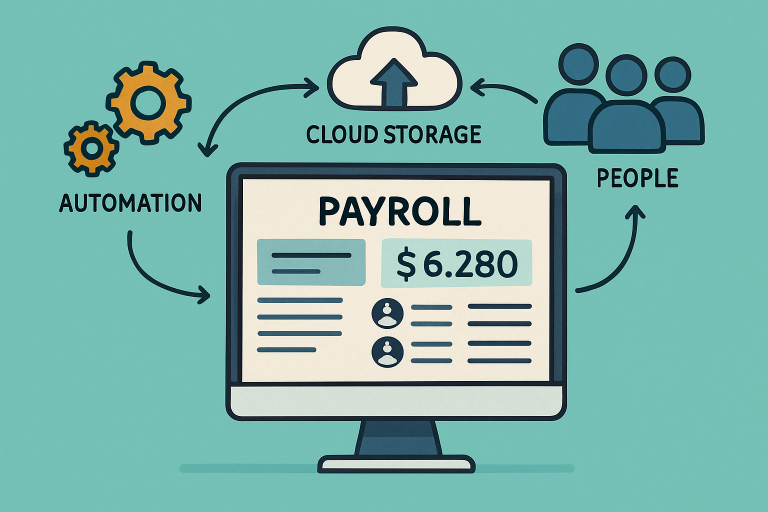
Innovative Strategies for Streamlining Payroll Processes

Efficient payroll management is at the heart of employee satisfaction and regulatory compliance, and businesses continually seek ways to optimize the process. As technological advances offer new solutions and business needs evolve, organizations are under greater pressure than ever to pay employees on time and accurately. Adopting innovative strategies for payroll helps companies avoid costly mistakes, save valuable administrative resources, and improve overall satisfaction among staff and stakeholders alike.
Today’s payroll landscape encompasses more than simply issuing paychecks; it requires balancing compliance, data security, user experience, and cost efficiency. Innovative payroll solutions transform manual workflows into seamless, automated processes, reduce human error, and ensure readiness for future challenges. Proactively embracing these new methods can also foster organizational agility, helping businesses stay ahead in an ever-changing regulatory environment.
Increasingly, companies are turning to technology-driven solutions to address pain points such as regulatory complexity, employee self-service, and real-time information demands. Organizations with streamlined payroll enjoy a competitive edge—freeing HR teams to focus on initiatives that support business growth and employee engagement, rather than grappling with paperwork or compliance lapses. Every optimization adds up in terms of cost savings and improved employee trust.
As remote work and distributed teams become more common, innovative payroll strategies are vital in supporting flexibility, transparency, and compliance across diverse jurisdictions. Committing to modernization is more than convenience—it means building a resilient infrastructure to support growth and adapt to tomorrow’s challenges.
Automation and AI Integration
Automation and artificial intelligence revolutionize payroll management by transforming time-consuming manual tasks into swift, error-free operations. Payroll automation tools handle repetitive jobs—like wage calculations, compliance checks, and data transfers—allowing organizations to minimize errors, reduce overheads, and rapidly adapt to policy changes. Machine learning algorithms enhance payroll integrity by identifying anomalies, predicting errors, and assisting HR leaders with data-driven decision-making. Incorporating automation and AI can help organizations avoid costly delays, mitigate compliance risks, and promote a culture of continuous improvement.
Cloud-Based Payroll Solutions
Modern payroll platforms hosted in the cloud allow businesses of all sizes to centralize payroll data, streamline processes, and support remote work arrangements. These platforms provide on-demand access to payroll information from any connected device, enhancing transparency and responsiveness for HR teams and employees. Features such as automatic software updates ensure organizations comply with the latest tax laws and regulatory requirements. Storing payroll data in the cloud also strengthens data security and reduces the risk of breaches, helping organizations meet privacy standards like GDPR and HIPAA.
Self-Service Employee Portals
Employee self-service portals transform HR and payroll by empowering staff to manage their information—requesting time off, updating tax forms, and viewing pay history without HR intervention. This reduces the volume of administrative queries and frees up HR resources to focus on more strategic value-adding activities. Self-service features increase transparency, enable faster response times, and give employees greater confidence in the accuracy of their records. For organizations seeking to improve compliance and employee experience, self-serve platforms are a vital investment.
See also: Building a Sustainable Business: Strategies for Long-Term Growth
Robotic Process Automation (RPA)
RPA introduces software “bots” that handle repetitive, rule-based payroll tasks with unmatched efficiency and consistency. By automating steps like timecard data validation, deductions calculation, and batch payroll processing, RPA delivers:
- Streamlined payroll cycles, helping companies meet even the tightest timelines
- Reduced risk of manual-entry errors
- Enhanced compliance with built-in update mechanisms for new tax or labor laws
- Full audit trails for detailed oversight and accountability
Many HR teams start by automating one or two high-volume tasks, then scale RPA to other processes after seeing immediate efficiency improvements.
Continuous Payroll Processing
Continuous payroll shifts the paradigm from traditional pay cycles to a dynamic, real-time approach. Rather than waiting for a specific date to process payroll in bulk, wages are calculated and paid as soon as work is completed. Key benefits of this emerging trend include:
- Increased employee flexibility and satisfaction
- Real-time correction of payroll errors
- Improved cash flow for both business and staff
- Greater organizational agility in adapting to new pay policies or gig-economy contracts
Continuous payroll requires both a technical and cultural transition. It involves embracing a new relationship between work performed and timely compensation.
Blockchain for Payroll Security
Blockchain technology offers breakthrough advantages for payroll, including tamper-proof recordkeeping and secure, transparent audit trails. With blockchain, companies can implement smart contracts that automatically release wages when pre-set conditions are met and simplify the often-complex world of cross-border payments.
- Immutable, unalterable payroll records
- Enhanced employee data security and verification
- Elimination of intermediaries in global payroll transactions
Though still nascent, blockchain for payroll promises a future of ironclad compliance and streamlined global payments for forward-thinking organizations.
Centralized Data Management
Centralized data management consolidates all HR and payroll information into a unified platform. By housing time-tracking data, salary history, tax forms, and benefits documents together, organizations virtually eliminate data silos and reduce the risk of discrepancies. Real-time access to payroll metrics and up-to-date employee info supports strategic decision-making and ensures that organizations can respond promptly to audits, employee queries, or regulatory changes.
Real-World Examples of Payroll Streamlining
Recent case studies show businesses’ success in implementing advanced payroll systems to boost efficiency and compliance. A small retail biz moved to a cloud-based payroll platform, reducing errors by 30% in six months, cutting workloads, and saving over 20 hours monthly via self-service features, easing tax reporting and lowering regulatory fines. A global tech firm improved payroll across 15 countries by integrating AI with ERP, reducing double entries, enabling real-time onboarding, and improving HR oversight with centralized dashboards. Adopting these systems boosts efficiency, reduces compliance risks, and increases employee satisfaction. Staying informed about evolving payroll tech is vital for competitiveness.
Conclusion
The future of payroll lies in technology-driven transformation. From automation and AI to blockchain security and continuous payroll, today’s innovations redefine how organizations manage compliance, efficiency, and employee experience. Cloud platforms, self-service portals, and RPA tools streamline processes while empowering HR teams and employees with greater accuracy and transparency. Case studies show that adopting modern solutions delivers measurable benefits for a small business seeking error reduction or a global enterprise unifying payroll across borders. As workforce needs evolve, businesses that embrace intelligent payroll systems will keep pace with change and strengthen resilience, trust, and long-term growth.